
ಒರಳು ಮತ್ತು ಒನಕೆ
The Mortar and Pestle is one of the oldest and most enduring food preparation and
medicinal tools in human history, widely used in Karnataka for centuries. Traditionally
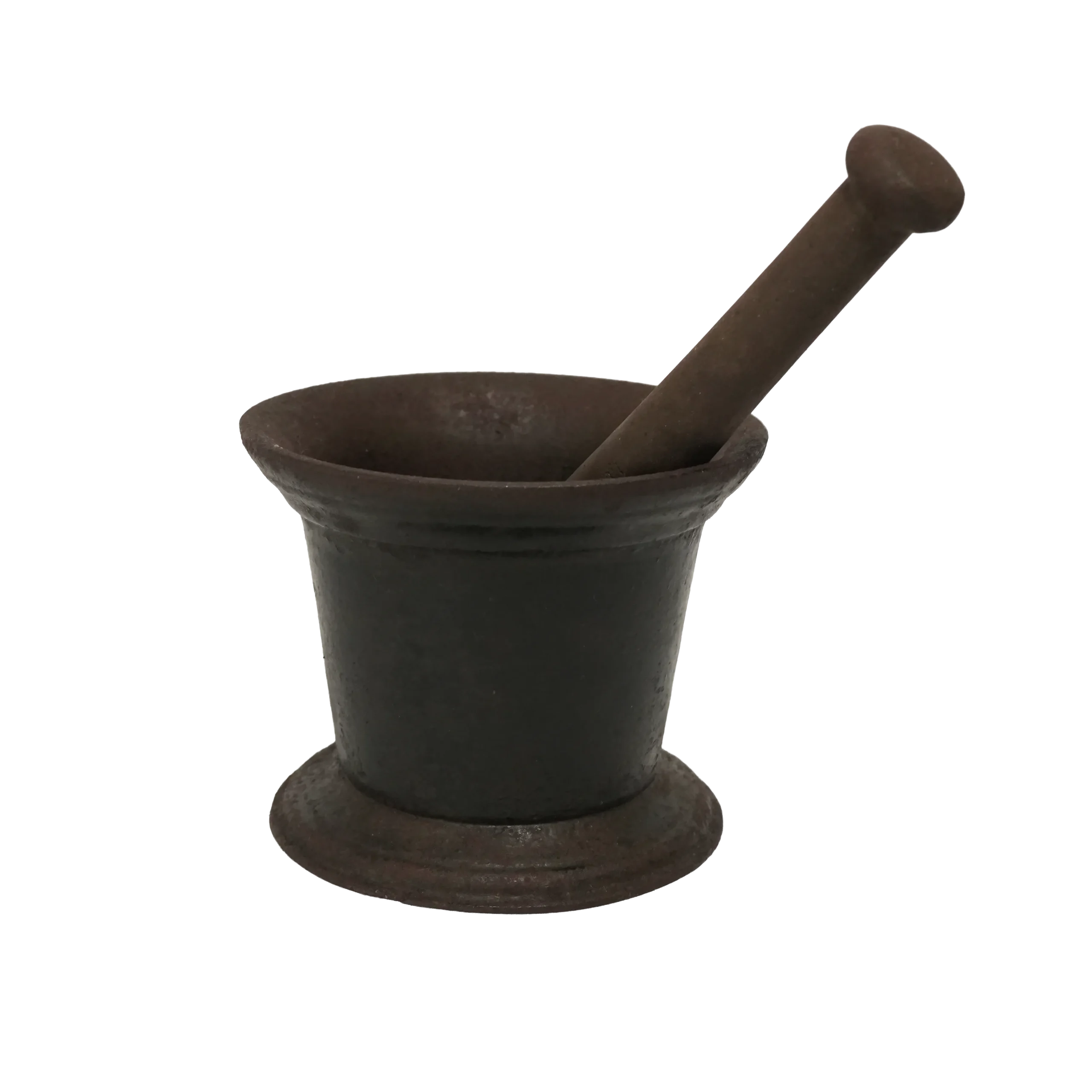
known as Oralu Mattu Onake, this artifact consists of a deep bowl-shaped mortar
and a club-shaped pestle, designed for pounding, crushing, and grinding a variety of
ingredients. This particular example is crafted from cast bronze or bell metal, giving it
a smooth, heavy construction and a dark grey-black patina that reflects its age and
prolonged use. The mortar has a broad, flared opening with a deep interior that
prevents spillage during grinding, while the long, rounded pestle provides a
comfortable grip and efficient pounding action.
It was commonly used to prepare
spices, herbs, grains, medicinal plants, and ceremonial ingredients by manually
crushing them into fine powders or smooth pastes without the need for electricity.
The weight of the metal enhanced the grinding process, making it especially effective
for preparing traditional South Indian spice blends, Ayurvedic medicines, herbal
remedies, and sacred offerings used in temples and religious ceremonies. In
Karnataka households, the rhythmic sound of the mortar and pestle in the early
morning was once a familiar part of daily life, symbolizing the preparation of food,
medicine, and nourishment for the family. Beyond its practical function, the Oralu
Mattu Onake represents the region's rich culinary traditions, indigenous medical
knowledge, and cultural heritage. Although modern electric appliances have largely
replaced such implements, this timeless tool remains a powerful symbol of traditional
craftsmanship, self-reliance, and sustainable living. Preserving it in a college
museum enables future generations to appreciate the skills, knowledge, and
everyday practices of earlier communities while recognizing its enduring importance
in the culinary, medicinal, and cultural history of Karnataka.
