
ಕುಂಭ / ಕಳಶ
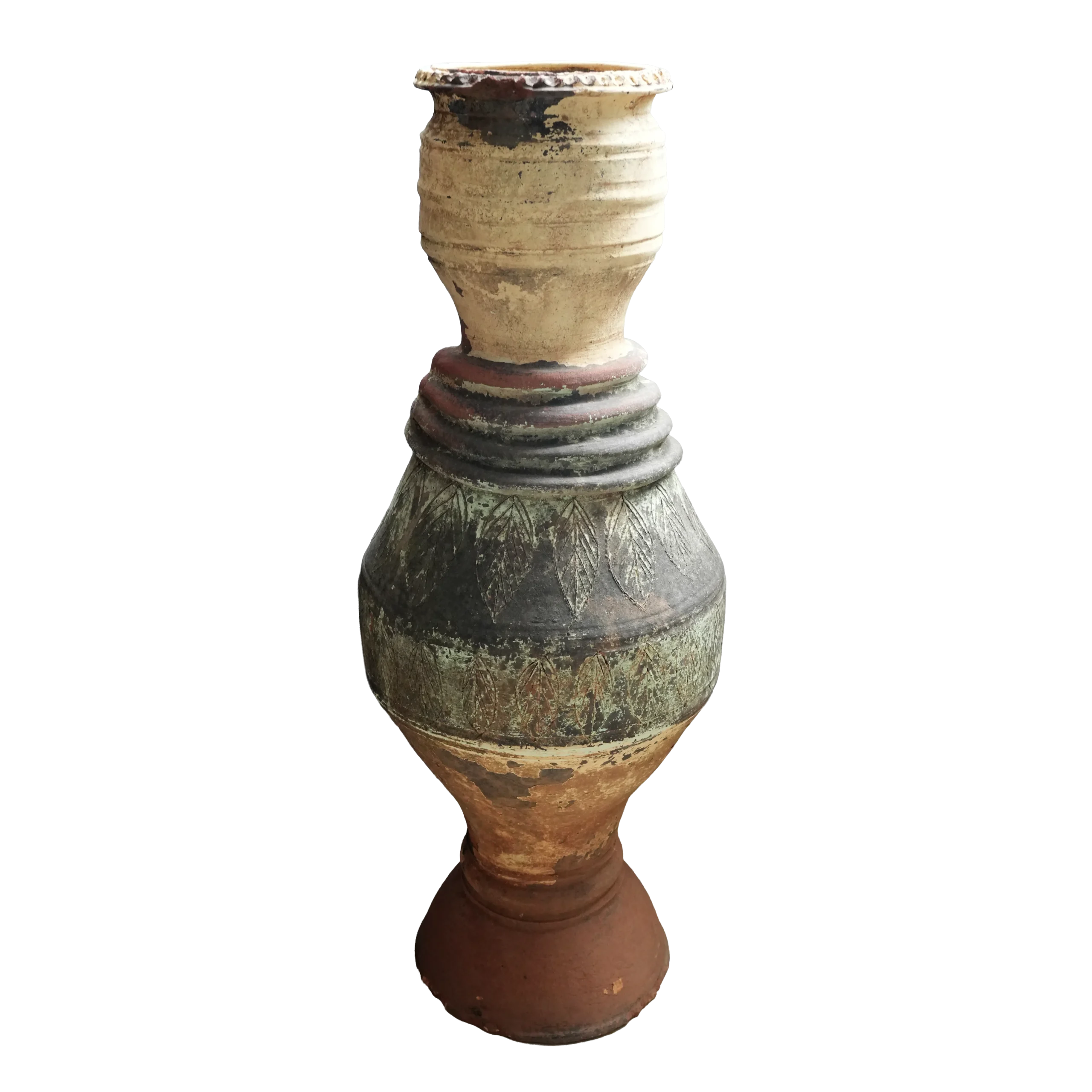
The Decorative Terracotta Ceremonial Pot (Kumbha / Kalasha) is a remarkable
example of Karnataka's rich pottery tradition and represents one of the oldest forms
of human craftsmanship. The word terracotta, derived from the Latin phrase terra
cocta meaning "baked earth," refers to clay that has been shaped and fired to create
durable ceramic objects. This large ceremonial vessel is handcrafted from natural
clay using the traditional potter's wheel and is further embellished by hand with
applied clay relief work, incised patterns, and sculpted ornamentation before firing.
The pot has a broad, rounded body that tapers into a narrow neck and opens into a
wide flared rim decorated with continuous rows of impressed triangular and bead-like
motifs. Its shoulder is adorned with distinctive relief sculptures depicting stylised
hands, beaded necklaces, floral designs, and leaf patterns, each carrying symbolic
and ritual significance. Traditional tools such as the potter's wheel, convex stone,
and wooden mallets were used to shape and finish the vessel. The surface displays
characteristic variations of blackish-brown and reddish-beige, produced through the
traditional reduction-firing technique, demonstrating the craftsmanship of Karnataka's
potters. Its thick-walled construction provided strength and durability, making it
suitable for long-term storage and ceremonial use.
Traditionally, the Kumbha or Kalasha served both practical and ritual purposes in
the daily life of rural Karnataka. It was widely used to store grains, water, oil, and
other household provisions, while its porous terracotta walls naturally regulated
moisture and helped preserve stored food. Water kept in the vessel remained cool
due to the evaporative properties of fired clay, making it especially valuable in the
warm climate of the Deccan region. The wide mouth allowed easy access to stored
contents, while the narrow neck helped reduce evaporation and protected the
contents from dust and insects. During festivals, community feasts, and other
ceremonial occasions, such vessels were also used for cooking, storing, and serving
food in large quantities.
