
ಮರದ ಮುದ್ರೆ
The Traditional Wooden Textile Printing Block is an important example of
Karnataka's rich textile and handcraft heritage, reflecting the skill and ingenuity of
traditional block-printing artisans. Hand-carved from durable hardwood, most likely
teak or rosewood, this antique printing block consists of two interlocking pieces: a
carved base with a floral cavity retaining traces of deep red dye and a matching lid
engraved with a geometric star-and-petal design. A small metal alignment pin
ensures precise registration during printing, while the intricate relief carving
demonstrates the high level of craftsmanship required to produce uniform decorative
patterns. Traditionally, the block was used to print repeated floral and geometric
motifs onto fabric by applying natural dyes to the carved surface and pressing it
firmly onto stretched cloth, creating continuous designs for garments, household
textiles, temple hangings, and ceremonial fabrics.
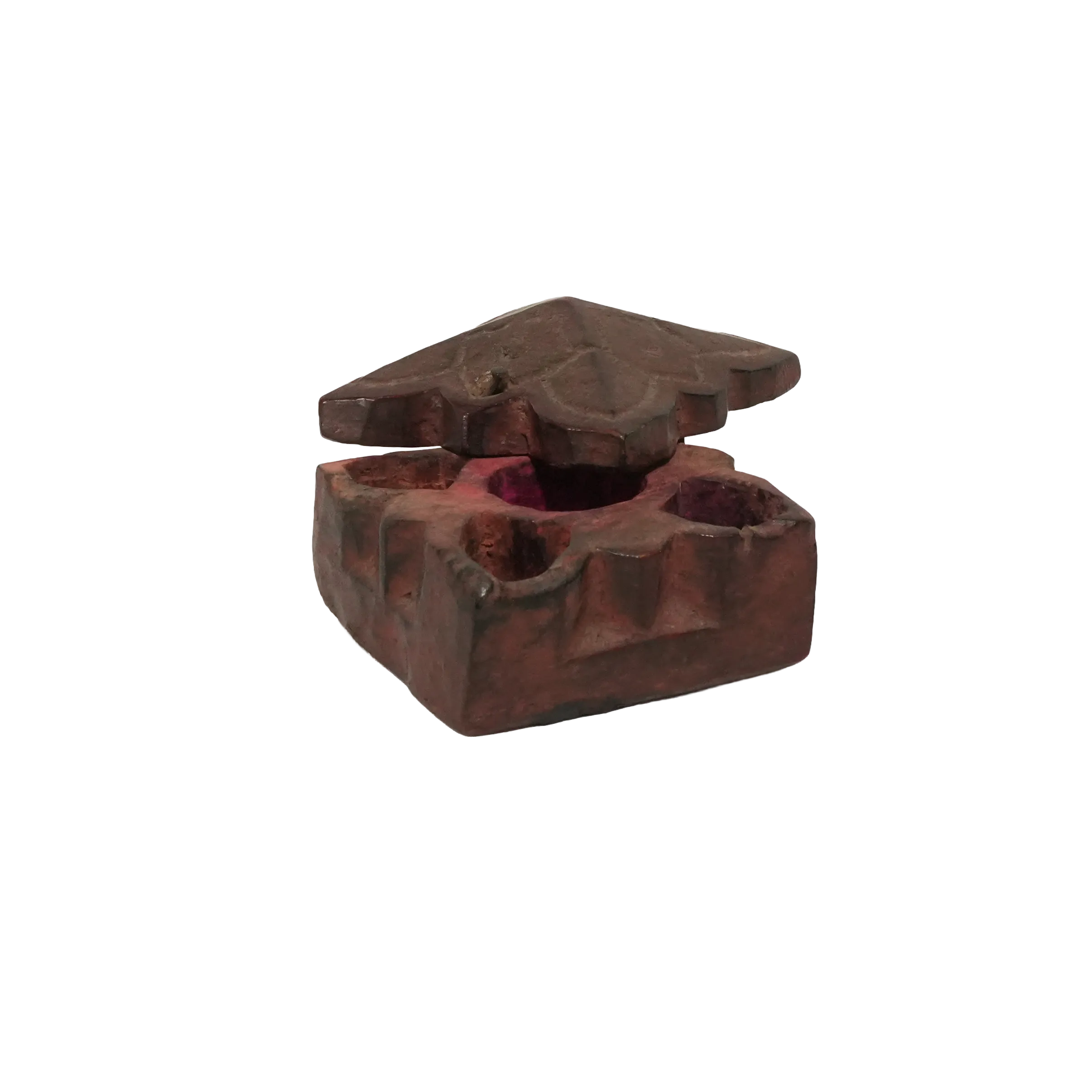
The deep red dye residue
preserved within the block provides clear evidence of its long and active use,
reflecting the traditional use of natural dyes such as madder and kumkum in South
Indian textile production. Hand block printing has been practised in India for
centuries, and in Karnataka this craft was sustained by skilled artisan communities
who passed their knowledge from one generation to the next. Inspired by nature,
temple architecture, and regional folk art, the carved motifs represent both artistic
expression and cultural identity. Although industrial textile production has largely
replaced traditional block printing, surviving tools such as this are rare and
historically significant. Preserving this wooden printing block in a college museum
helps safeguard Karnataka's textile heritage, highlights the craftsmanship of
traditional artisans, and enables future generations to appreciate the creativity,
technical skill, and cultural legacy embodied in this timeless craft.
