
ಸಂಖ್ಯೆಯ ಬೀಗ
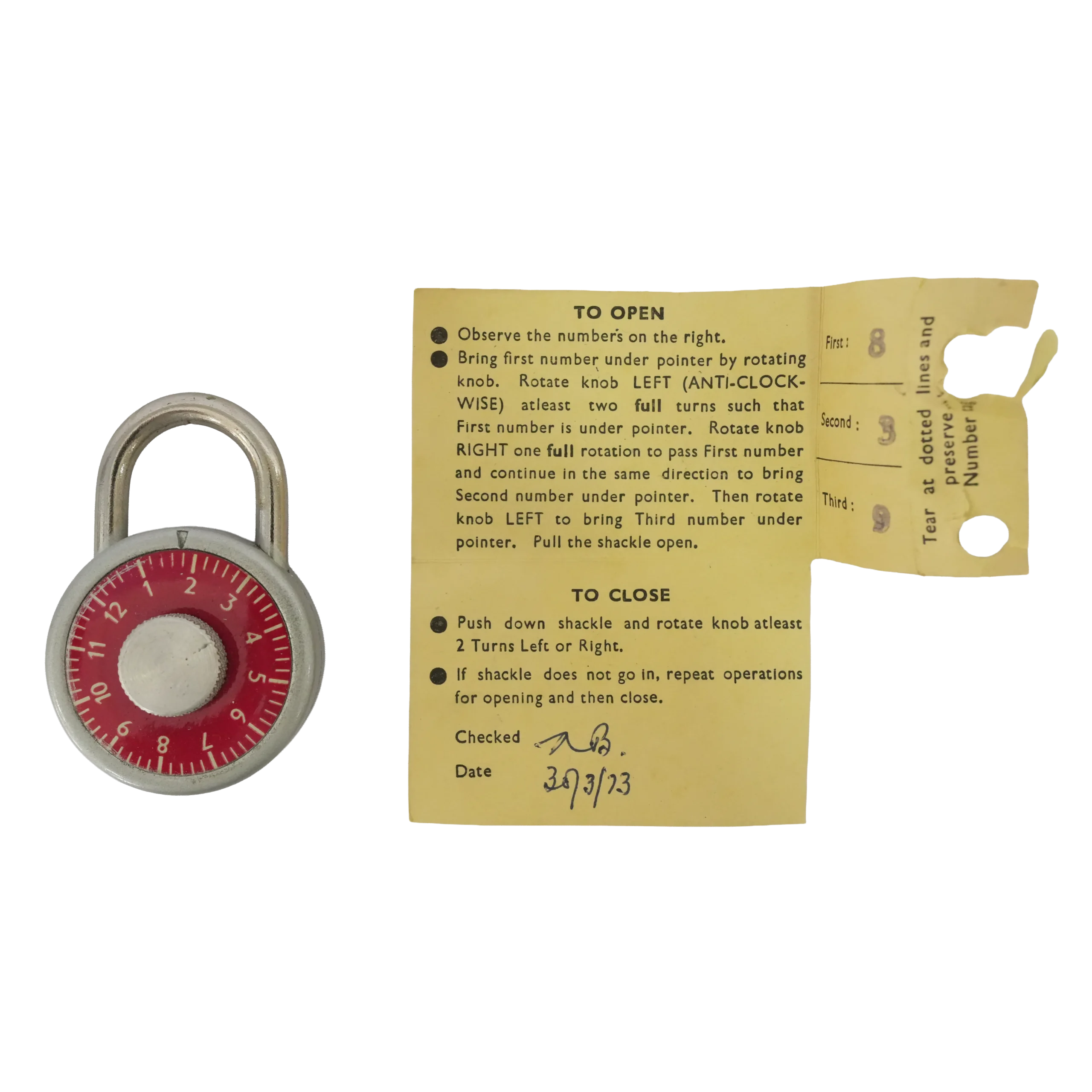
The Vintage Combination Padlock with Original Instruction Card is a well-
preserved example of mid-twentieth-century mechanical security technology. The
artifact consists of a sturdy cast-metal padlock with a polished silver finish, a
hardened steel shackle, and a distinctive red numbered dial, accompanied by its
original factory instruction card dated 30 March 1973. The instruction card retains
the handwritten three-number combination—8, 3, and 9—recorded on the
detachable security tab, making this a rare and complete historical set. The lock
operates without a key, using a precision-engineered three-number combination
mechanism. To open it, the user rotates the dial in a specific sequence to align the
numbers with the pointer before releasing the shackle. This simple yet effective
design provided reliable security without the risk of losing a key and reflected the
ingenuity of mechanical engineering before the advent of electronic security
systems.
During the mid-twentieth century, combination padlocks were widely used
in homes, schools, colleges, offices, factories, warehouses, and railway luggage,
where they protected lockers, steel trunks, cupboards, and personal belongings. In
Karnataka, such locks were valued for their durability, convenience, and dependable
performance, particularly in educational institutions and workplaces. The survival of
the original instruction card, complete with its verification date and handwritten
combination, adds exceptional historical and archival value by providing a direct
connection to the original owner and everyday life during the 1970s. Today, this
artifact represents more than a simple locking device; it reflects the evolution of
personal security, mechanical innovation, and practical design in the pre-digital era.
Preserving it in a college museum enables students to appreciate the craftsmanship
and engineering of traditional security devices while offering a glimpse into the
technology and daily life of an earlier generation.
