
Brass Tumbler
A traditional ಗ್ಲಾಸ್ (Glass) in many Kannada homes refers to this sturdy brass tumbler used for everyday drinking, distinct from the rounded lota by its straight, slightly tapered cylindrical form. Likely made of brass (ಹಿತ್ತಳೆ) or possibly bronze (ಕಂಚು), its muted golden tone and darkened patches reveal the natural patina that develops in copper-based alloys over years of handling, washing, and exposure to water. The design is practical and time-tested: thick walls for durability, a balanced weight that sits firmly in the hand, and a gently flared rim that improves drinking comfort while helping prevent spills. Such tumblers commonly held water, buttermilk (ಮಜ್ಜಿಗೆ), milk, and occasionally herbal drinks; although coffee could be served in it, traditional South Indian filter coffee was more often presented in a stainless-steel tumbler–dabarah set.
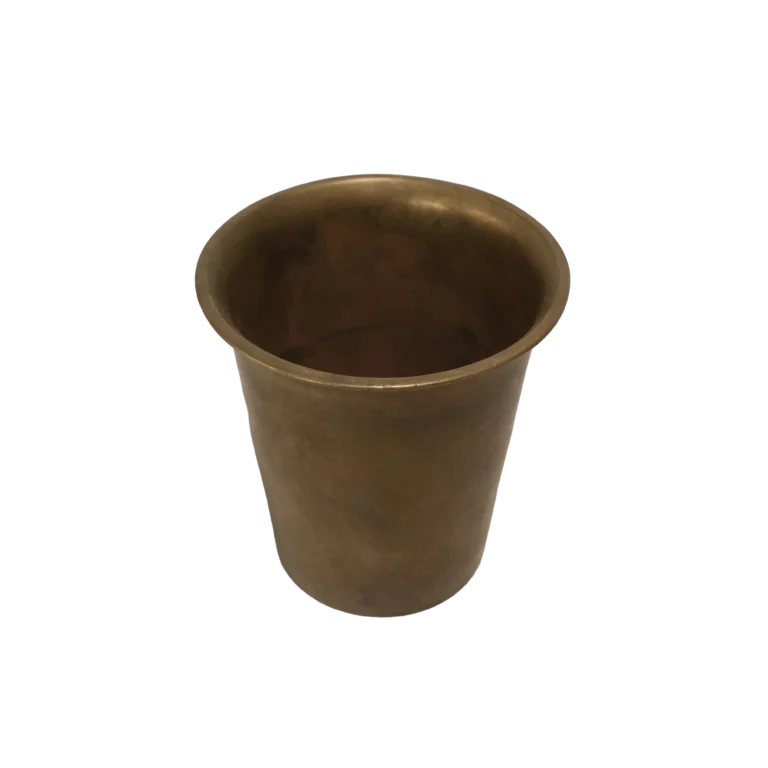
This brass tumbler was a quiet staple of kitchens across Karnataka and South India, valued not only for strength and longevity but also for the long-held belief that brass possesses natural antimicrobial qualities when properly maintained. It required regular cleaning with tamarind, ash, or lime to retain its shine and hygiene, becoming part of everyday household routines. Used with direct lip-to-rim contact, it was meant for daily utility rather than ceremony. The visible discoloration and surface wear are signs of long, regular service, and the vessel remains structurally sound and functional. More than a drinking cup, this ಗ್ಲಾಸ್ reflects a time when household objects were crafted to endure for decades, often becoming familiar, heirloom companions in everyday life.
