
ಅಡಿಕೆ ಕತ್ತರಿ (Adike Kattari)
The ಅಡಿಕೆ ಕತ್ತರಿ (Adike Kattari) is a traditional wall-mounted cutter used in Karnataka for slicing hard areca nuts (ಅಡಿಕೆ) into small, chewable pieces to be served with betel leaves. This lever-operated device is fixed to a wall or wooden board for stability, allowing the user to place the nut on a small platform and press the long handle downward so the hinged blade cuts through it cleanly. The body appears to be made of brass (ಹಿತ್ತಳೆ), visible in its yellowish tone and greenish patina from age, while the cutting edge is iron or steel. The serrated, cog-like feature at the top is not part of the cutting action but likely serves as a decorative element or a grip to help control and lift the lever. Stamped markings such as “No 14” and what appears to be “1920” suggest a model number and possibly an early 20th-century manufacture, indicating that this piece may be a genuine antique.
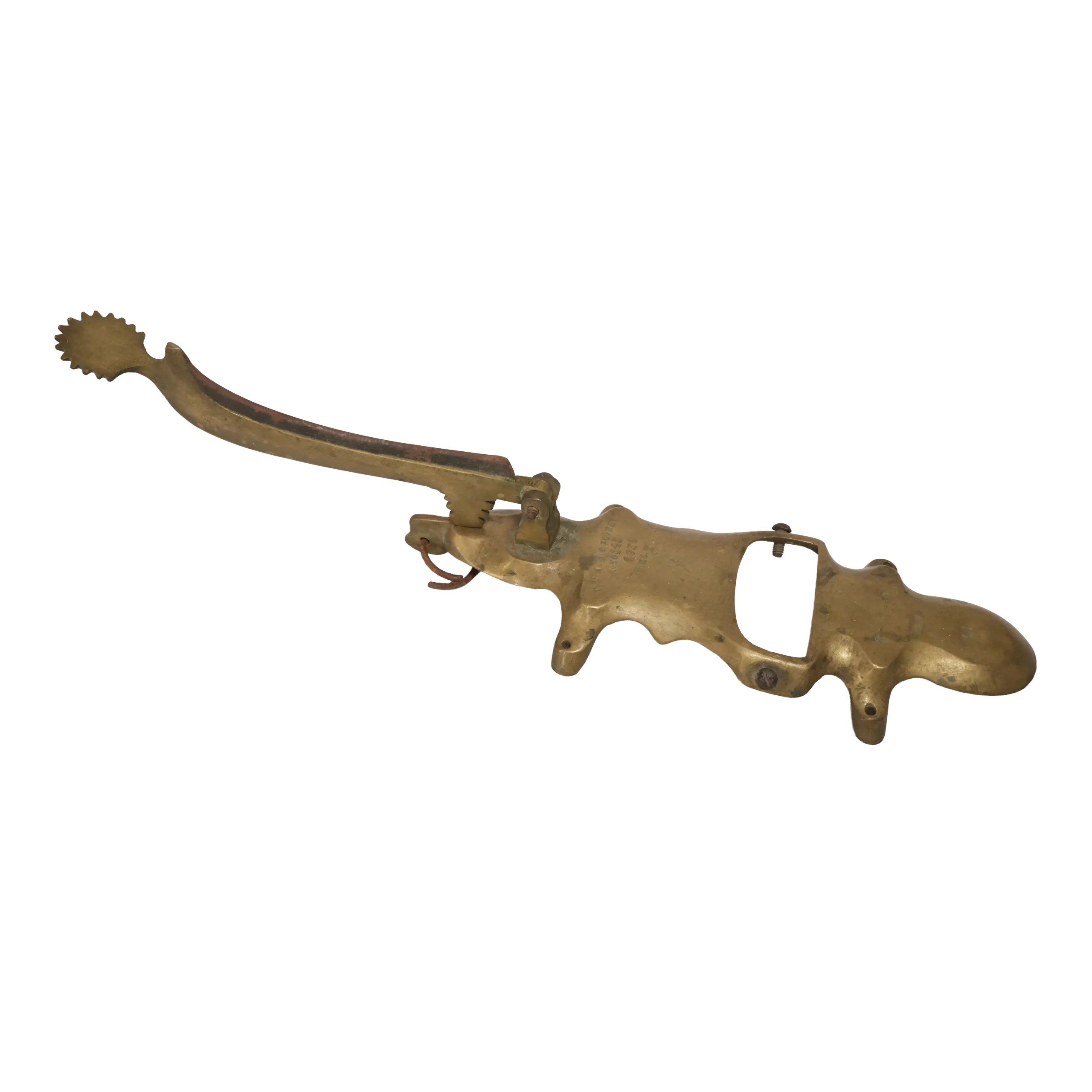
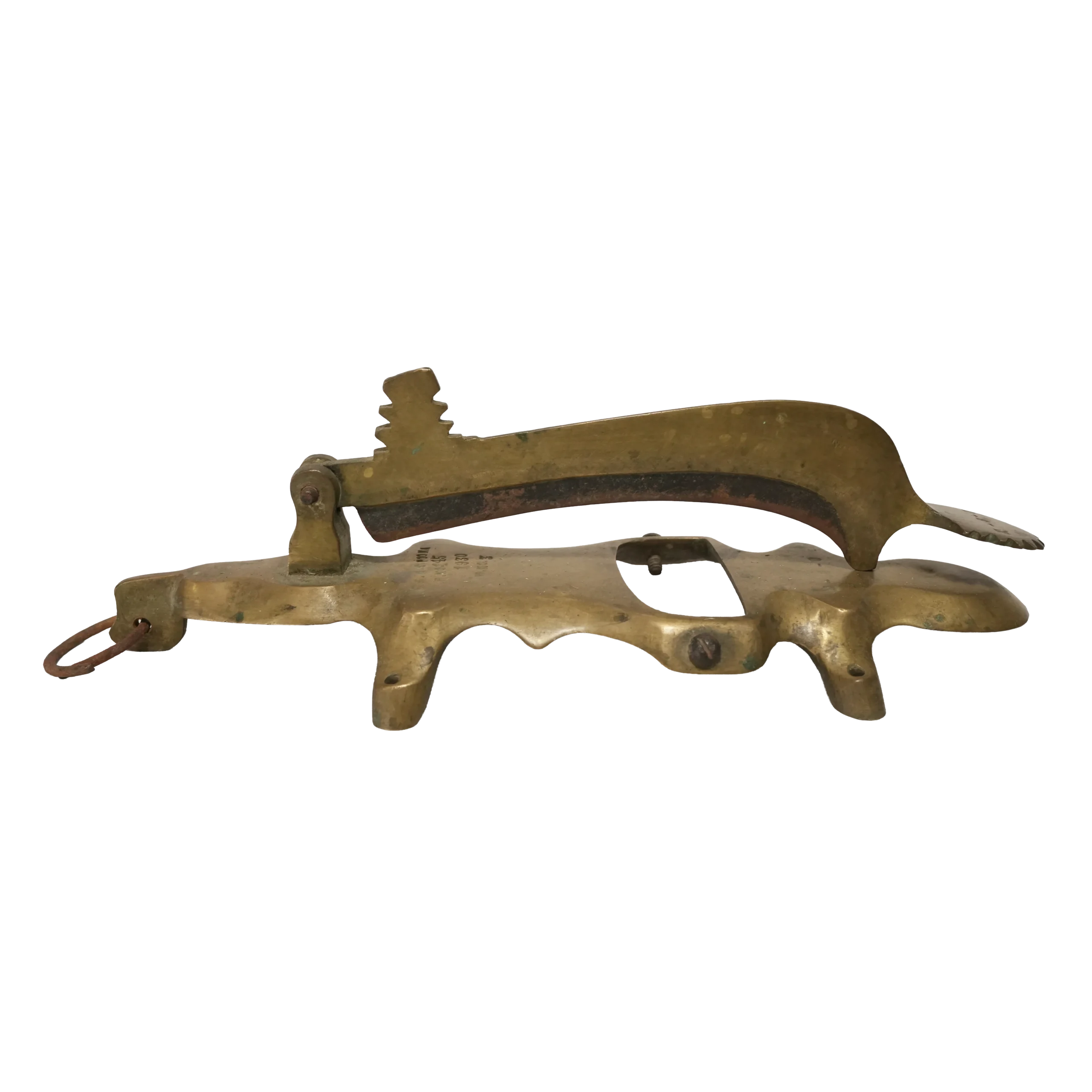
Such cutters were once common in traditional households, where preparing adike with betel leaf (ವೀಳ್ಯದೆಲೆ) was part of daily hospitality, post-meal custom, and ceremonial practice in weddings and rituals. A well-made Adike Kattari was both a practical tool and a matter of household pride, often mounted prominently for regular use. The visible wear, aged patina, and intact mechanism point to long service and careful preservation, and it may still be functional today. More than a cutting device, this Adike Kattari represents a living fragment of social tradition, craftsmanship, and the everyday cultural practices of old Karnataka homes.
