
ಮಸಿ ಬುಡ್ಡಿ (Masi Buddi)
A traditional ಮಸಿ ಬುಡ್ಡಿ (Masi Buddi) is a compact ink pot used for dip-ink writing, accompanied by a wooden ಲೇಖನಿ (Lekhani). The vessel is made of bronze (ಕಂಚು), as indicated by its weight, darkened tone, and natural patina formed through long oxidation. Its form is practical and deliberate: a rounded belly to hold sufficient ink; a narrowed neck and small mouth to prevent spills and reduce evaporation; and three short legs that keep it steady even on uneven floors or low writing platforms. Subtle vertical ridges improve grip while adding quiet ornamentation, and the small side projections are decorative lugs that contribute to balance and visual character rather than serving as loops. The wooden pen, likely a later addition, resembles the simple dip tools once fashioned from wood, bamboo, or reed and dipped frequently to write a few words at a time.
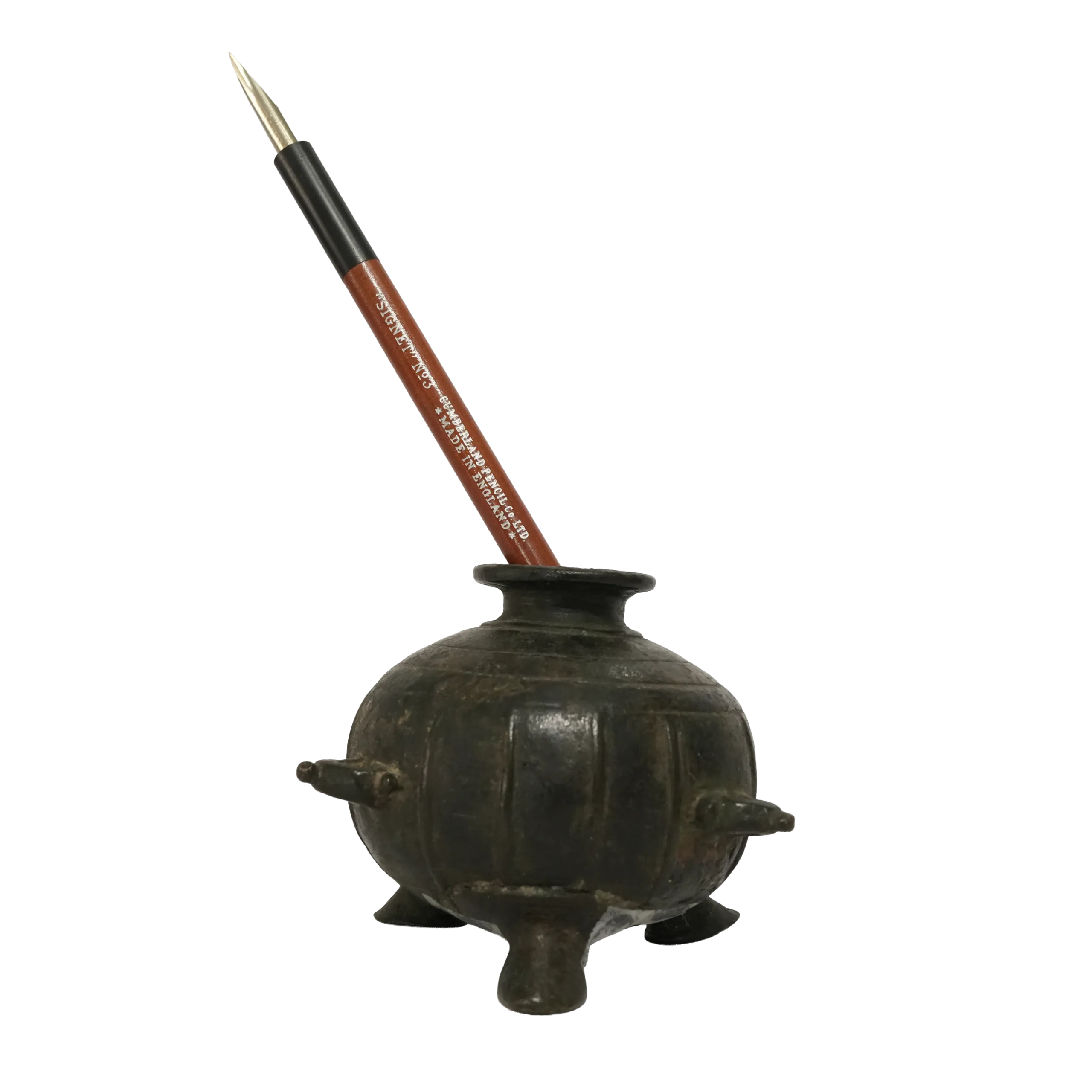
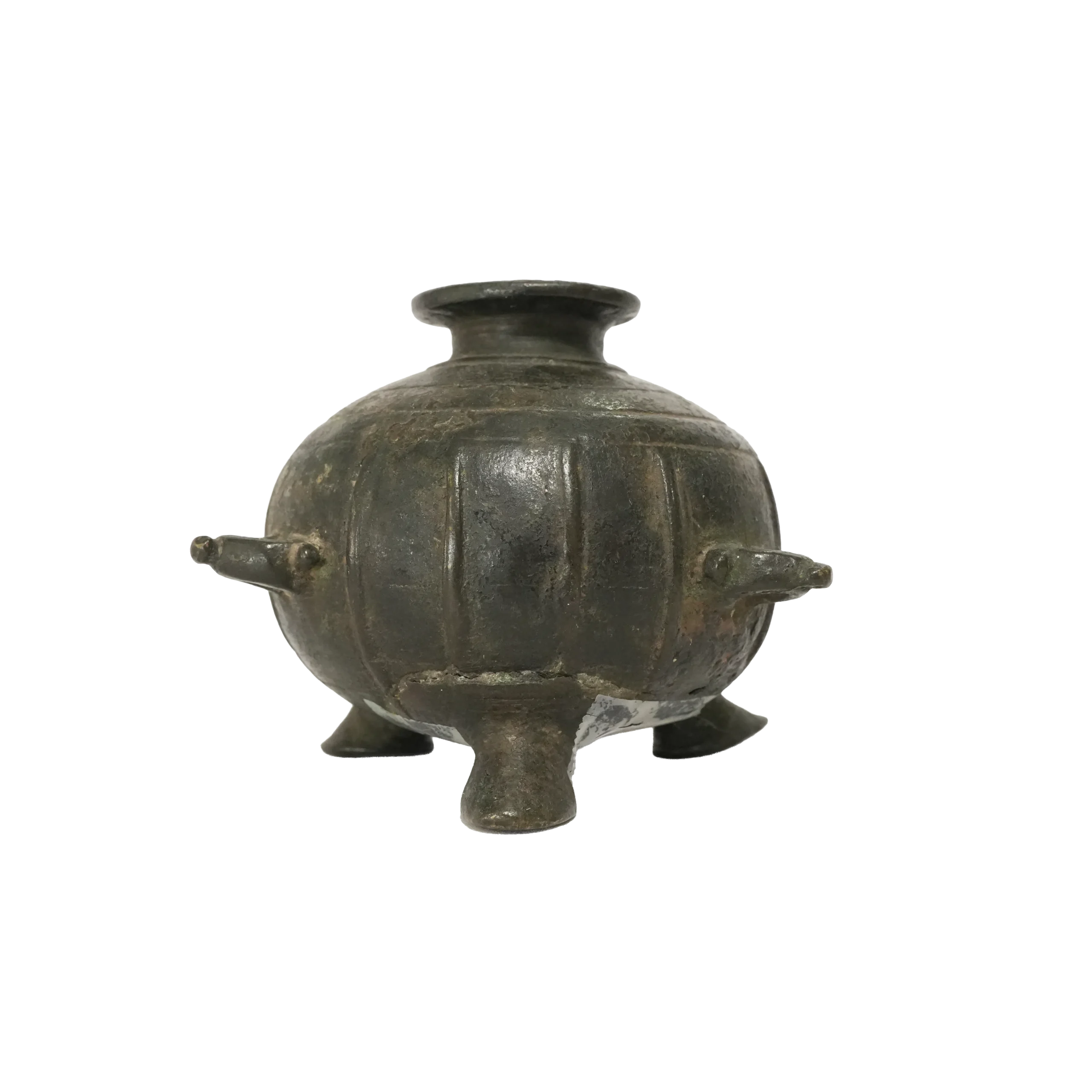
Such inkwells were once common across Karnataka in homes, schools, and village offices, used daily by students, teachers, scholars, and accountants of the ಶಾನಭೋಗ / ಕರ್ಣಂ tradition. They supported meticulous record-keeping, letter writing, and learning in an era before fountain pens and ballpoints. The wear on the surface, the smoothness along the rim, and the intact structure all suggest long, careful use rather than mere display. This ಮಸಿ ಬುಡ್ಡಿ is therefore more than a container for ink; it is a small, enduring witness to the handwritten practices that shaped education, administration, and literary culture in traditional Kannada society.
